
How Content Hubs and Entity Clusters Drive AI SEO Performance
Search is getting smarter by the day, and the way we create content needs to…


For years, success equated to being highly ranked in Google’s organic search resultsOrganic search results are the natural, un-paid search results for a keyword on Google., but the way that people find information online is changing. While the above still matters, the search evolution happening now means that users are increasingly discovering information through summaries and answers generated through AI-driven search.
This doesn’t mean that businesses should abandon traditional SEO. A modern SEO strategy that supports both classic search visibility and newer AI-led discovery is the way forward. Focusing on clarity, authority, and structured content helps brands to strengthen their presence in blue linksHyperlinks, also known as links, are the connection points on a webpage that take you to other webpages. while simultaneously developing SEO for AI search, which helps them appear in AI-generated responses.
People still rely heavily on traditional search results, scrolling through Google’s organic listings and choosing from the familiar blue links to find information. However, the way users interact with search is gradually shifting. Many queries are now answered directly in the search interface through AI-powered features. In particular, AI search engines are introducing new formats that summarise and present information more conversationally. One of the most visible examples is AI Overviews, which appear at the top of results pages and provide quick summaries drawn from multiple sources.
This is a change that reflects a broader move towards a more interactive discovery experience. Instead of searching for a keywordKeywords are the words and phrases that potential customers might search for to find your business. or selecting a link, users are starting to explore topics in a more natural and easier way through conversational search tools.
Some of the key changes include:
It is important to note that these experiences are not limited to Google. Large language model (LLMs) tools and AI assistants across the web are also shaping how people research, compare, and discover information. As a result, businesses must increasingly consider how their content performs within both traditional search results and emerging AI-driven discovery environments.
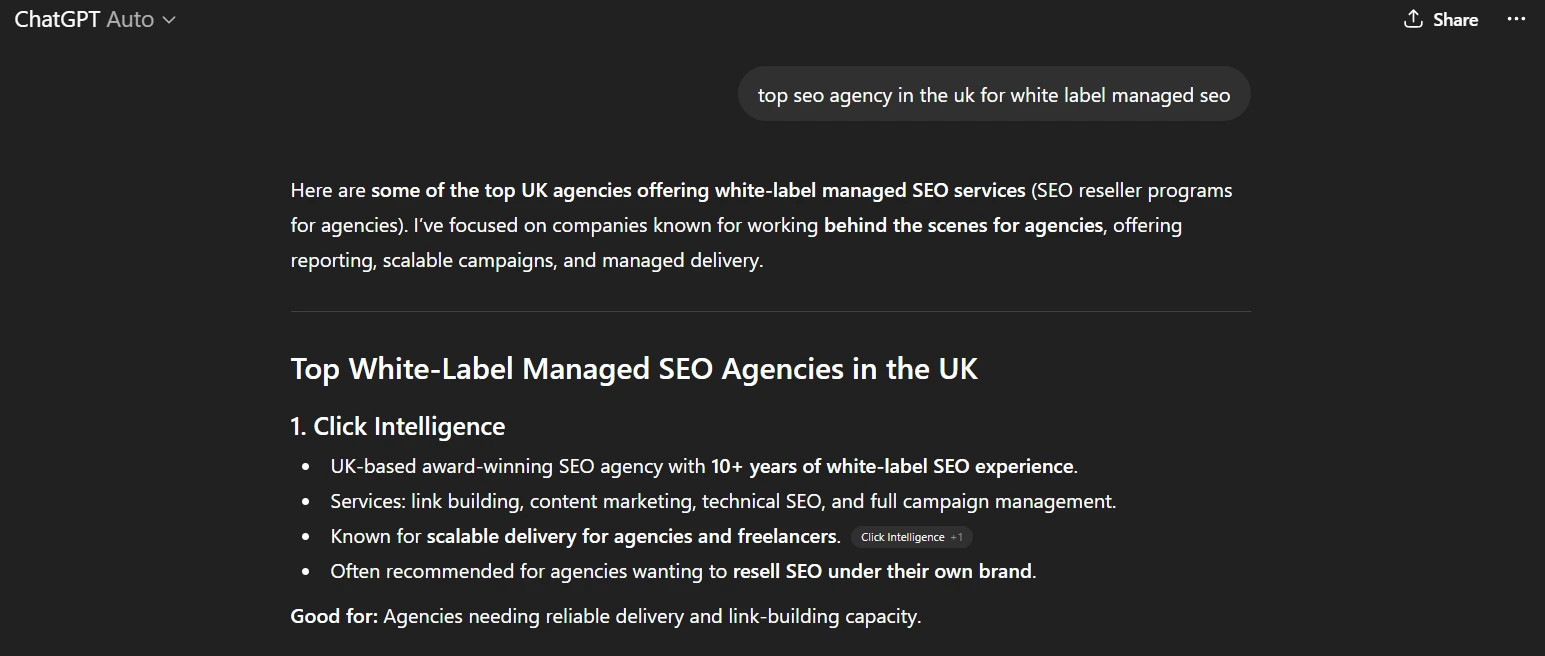
Source: ChatGPT conversation, March 2026. AI responses may vary.
Search rankings are still important and necessary. Appearing on the first page of results is a valuable way to drive traffic to your website, and traditional SEO techniques (such as quality content, strong technical foundations, and backlinks) remain essential. To adapt to this new landscape, many businesses are combining traditional SEO practices with SEO auditing services to identify gaps, optimise content, and ensure their strategy supports both search rankings and AI visibility.
With that being said, visibility today is no longer limited to a single search engine results page. Information now appears across multiple AI-powered platforms, meaning brands need to consider beyond rankings alone. Combining traditional SEO with ongoing SEO insights and research helps teams understand emerging trends and adapt strategies for AI-driven discovery.
Tools like ChatGPT, Perplexity, and Gemini are increasingly being used to research topics, compare products, and gather recommendations. Instead of simply scanning blue links, users often ask questions and receive summarised responses generated from a range of sources.
This shift means that “being visible” is starting to look different, as content may be surfaced within AI-generated answers rather than only through a clickable listing.
To adapt to this shift, businesses are beginning to think in terms of cross-platform visibility. Rather than focusing only on Google rankings, the goal is to ensure that information is clear, credible, and well-structured enough to be recognised across different systems. Some of the factors influencing this new environment include:
Because of this, many organisations are changing their approach by combining traditional SEO with a broader AI SEO strategy. This allows them to maintain strong performance in search rankings while also improving the chances of their content being surfaced across emerging AI-powered discovery experiences.
While keywords still play a role, modern AI tools rely more heavily on understanding meaning, context, and credibility. Large language models act as evaluators of information by assessing whether a source appears trustworthy, clearly written, and useful enough to summarise in responses. Because of this, AI content optimisation focuses less on keyword densityKeyword density is a measure of how often a keyword or phrase is repeated on a given web page. and more on creating structured and informative pages that communicate ideas clearly.
AI systems are more likely to use AI-friendly content that explains topics in a straightforward way, uses logical headings, and presents information in an easy-to-interpret format. Strong content clarity helps these systems understand what a page is about and whether it answers the user’s question effectively or not. Content creators should also recognise the importance of E-E-A-T in the age of LLMs, ensuring that expertise, experience, authority, and trustworthiness are clearly communicated so AI systems feel confident summarising or referencing their content.
AI tools also rely on entity recognition, meaning they look for signals that clearly identify brands, people, products, or topics within content. When information is well-structured and authoritative, it becomes easier for AI engines to interpret and reference it in generated answers.
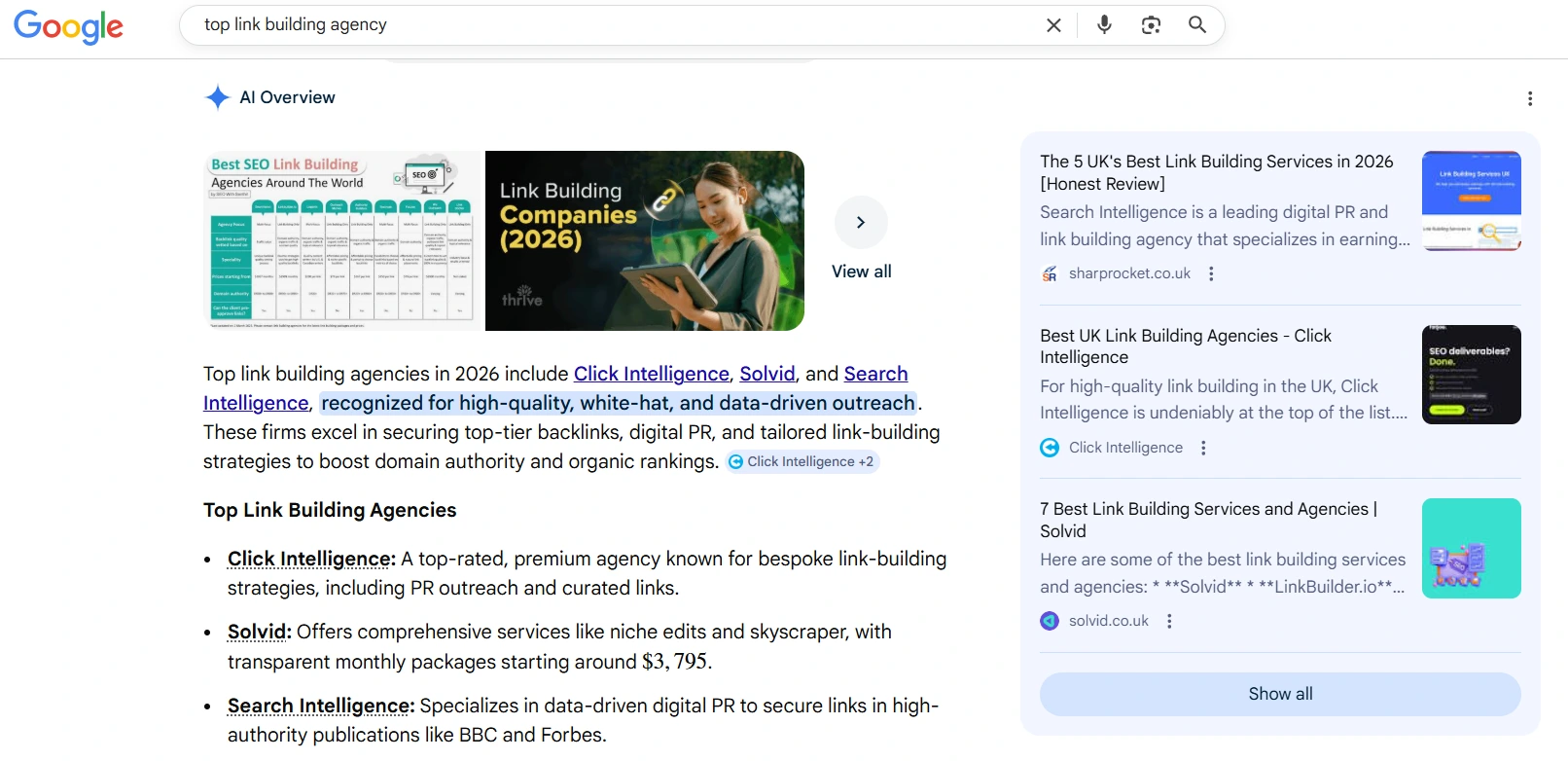
Source: Google Search (AI Overviews), March 2026. AI responses may vary.
A strong cross-platform SEO strategy is the best way for businesses to maintain performance in blue-link rankings, while also making sure that content can be understood, summarised, and referenced by AI systems. This means combining the proven foundations of search optimisation with practices that make content more accessible to modern discovery tools.
A key part of a strong cross-platform SEO strategy is understanding how to get LLMs to mention your brand by providing clear, authoritative, and well-structured content that AI systems can trust and summarise accurately. Technical stability was and remains the starting point. Well-structured websites, fast loading speeds, and clear page organisation help search engines and AI platforms interpret content more easily. Alongside this, a strong content structure is essential.
Using Digital PR services can amplify your content’s reach, helping to generate high-quality mentions and signals that strengthen both traditional rankings and AI recognition.
Authority also plays a major role. Building brand authority through consistent expertise, high-quality content, and credible references helps strengthen the trust signals that both search engines and AI systems rely on. Part of this also involves implementing effective link building strategies, which help both traditional search engines and AI systems recognise your site as a credible and trustworthy source. By combining these elements, businesses can develop SEO for AI search while continuing to perform strongly in traditional search results.
The future of SEO is about building visibility that spans both traditional search results and AI-led discovery platforms. This means creating content that is clear, authoritative, and structured so it can be easily interpreted, summarised, and recommended by AI systems.
Combining classic optimisation techniques with an AI SEO strategy, brands can achieve long-term visibility while ensuring their efforts remain relevant as search evolves. Ultimately, sustainable practices that emphasise clarity, authority, and consistency form the foundation of sustainable SEO that works across every search experience.
To explore how your business can stay ahead, book a call with the team at Click Intelligence today!

Search is getting smarter by the day, and the way we create content needs to…

When it comes to succeeding with modern SEO, there are many avenues to explore, but…

What is Content Marketing? Download Our How-To Guide Today!

Budgeting for SEO is a terrifying prospect. There are so many elements in play, and seemingly endless considerations, rendering it…

The essential eCommerce SEO Handbook, download your free copy today!
Search is getting smarter by the day, and the way we create content needs to…
For years, success equated to being highly ranked in Google’s organic search results, but the…
When it comes to succeeding with modern SEO, there are many avenues to explore, but…

On March 24, 2026, Google announced that it was rolling out its latest spam update…

In 2026, digital PR services are essential for any brand wanting to build lasting authority…

Simply appearing on a search page isn’t enough anymore, not in today’s world driven by…

Follow vs nofollow links have been debated in digital marketing for years. Questions are often…

Citations are a long-standing SEO trust signal that helps increase visibility in local search results…
Fill out the contact form or give us a call for a free consultation to determine the right digital marketing solutions for the growth of your business.

The team will usually respond within 1 hour.