
Top Tools for Marketing Agencies (Updated for 2024)
The world of marketing is a digital place, and it’s full of deep data. You…


The 4 P’s of marketing is a crucial concept. It is also vital that you understand that this is not just something that impacts large companies. Even small businesses need to use the four P’s. So, here we look at what the four P’s of marketing are and how you use them to build your brand and increase your revenue?
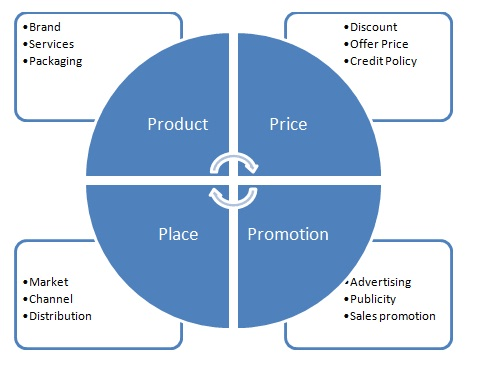 You may often hear them referred to as the four basic pillars of marketing. The 4 P’s are:
It is important to implement these, but you should also remember that the four P’s of marketing aren’t a magical solution; there is still work to be done.
In short, this is what you sell, whether this is a physical product like a can of drink or an online service such as SEO marketing. When relating your product to the 4 P’s, you need to be considering how to offer it in such a way that you are going to be seen over the crowd of competitors. You want to be the company that gets the customers. This means you need to consider why your product is unique and how it is going to stand out.
You will need to have a look at what is on offer from the competition and see what they are doing. Sadly, in the modern world, there is rarely such a thing as a unique idea, so you need to figure out how to stand out. Some questions that you can ask yourself to help determine the best way to market your product are – what is the biggest problem you are helping your customer solve? What don’t you like about your competitors?
The second in the 4 P’s of marketing is the Price. Clearly, how much you are charging for your product or service. But, how can you ensure that you have the right price? Is it something that people are prepared to pay that still ensures you are making a profit? If you pitch your price too cheaply, you risk distrust in your product. Customers will want to know what’s wrong with it, and, of course, you are undercutting your own profits.
So, you need to look at the current market and see how saturated it is, and whether you have arrived first or last in the space. Again, this means doing a competitor analysis to see what they are selling their products for. Key questions when it comes to pricing includes:
The third P stands for Place, or as they say, location, location, location. Now, it is understandable that you might think place is irrelevant if you are selling on the internet as this is a virtual global platform. However, it is entirely relevant and actually refers to where you are looking to get your product noticed. For example, Snapchat is known to be a very young person’s platform. Therefore, if this is not the target market, you are likely to be wasting your time and energy by pushing on Snapchat. Your website may be your best sales channel, or you might find a lot of your business on Facebook. Perhaps you should be attending conferences.
In order to define your best location, you need to understand your customer. Where are they? Are you a B2B business or a B2C business? Where do your competitors sell? Do you have online and offline outlets, or are you just online? The most successful companies have learned to go where their customers are and not tried to drag their customers to them.
The last of the P’s of marketing is Promotion. Just because you have a product and optimized the other three P’s, you will still not sell anything unless you promote yourself. Promotion is more than just getting yourself known. It is about generating that all-important revenue. Again, we’re going to start with what your competitors are doing. Smart marketing is about not having to reinvent the wheel. There are some great tools out there that enable you to monitor the competition.
These tools will return all sorts of information about the traffic they generate, how they use keywords to rank on Google, which sites talk about them and linked to them, and information about how they are generating social media shares. The only problem is they often need to be a larger competitor, as smaller ones may not be listed.

The world of marketing is a digital place, and it’s full of deep data. You…
It’s true: read any standard SEO guide you come across, and they’ll typically be aimed…
Ever wondered why certain websites appear at the top of Google’s results page when you search for something? That’s no…

Selecting an SEO agency is an important decision for any business. Check out our guide on how to choose an SEO agency successfully!


Towards the end of September, on the 24th, Google released the second spam update in…

The amount you invest in your link building budget should be based on the realistic…

Search engines aren't the only automated systems accessing, interpreting, and making sense of content found…

There's plenty of scope when creating SEO campaigns. Each industry that turns to experts for…

PR has long supported brands in building authority and spreading awareness, but PR distribution has…

SEO can be complicated. It’s constantly changing and is not a one-and-done job. That’s something…

Google announced it was rolling out a further spam update on August 18, 2026. It…

Growing an SEO agency takes a lot of hard work. You've got to keep up…
Fill out the contact form or give us a call for a free consultation to determine the right digital marketing solutions for the growth of your business.

The team will usually respond within 1 hour.