
How Can Brands Compete in ChatGPT Without Paying for Ads?
AI has become part of how people research and look for products, as well as…


Becoming an industry leader in a saturated market isn’t a simple feat, especially if you’re attempting to squeeze between many large, established rivals. Your online competitors are likely well-versed in search engine optimisation (SEO), and you’ll need more than the digital marketing basics to knock them down the search engine results pages (SERPs).
Rather than allowing your rivals to dominate Google, you must do everything in your power to boost your ranking in a competitive industry. Here are some top SEO tips for crowded markets.
The industries that spend the most money on Pay-Per-Click (PPC) are often the most competitive. They often need to develop a PPC campaign when their organic SEO strategy fails to produce desired results online due to considerable competition.
Of course, many industries will turn to PPC to secure a spot above organic SERPs, which is another indication of a competitive market.
The following highly competitive industries currently invest the most money in Google Ads:
However, the below industries are competitive for organic and paid SEO, such as:
If your business falls into one of the above competitive industries, many rivals are likely attempting to rank for the same keywords as you.
Highly competitive industries will have competitive keywords. Start your SEO journey by learning how to rank high-competition keywords using the Keywords Difficulty (KD) score, which is from one to 100. The higher the number, the more difficult it will be.
Here’s how to determine the KD score:
If you’re running a business in one of the most competitive industries, you must attempt to gain an SEO advantage to reach the first page of Google for specific keywords and phrases.
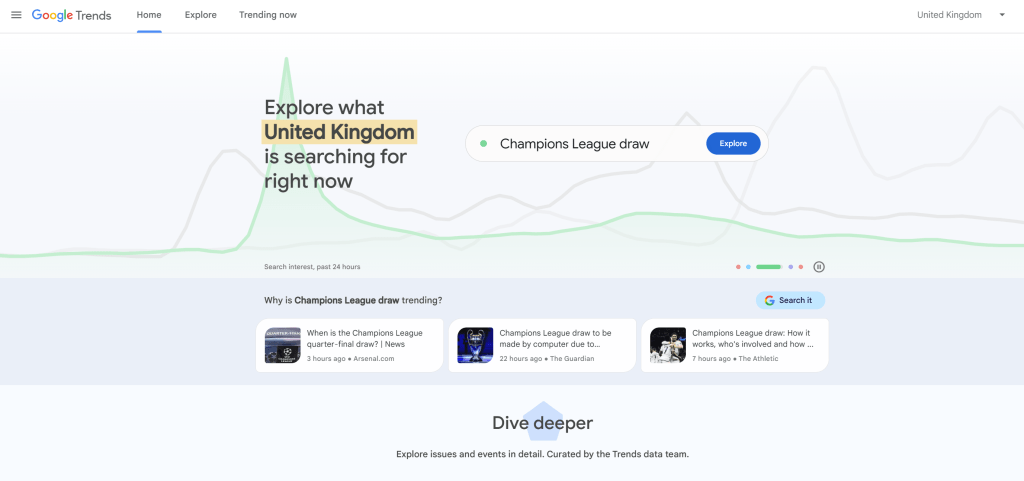
In addition to attempting to rank for competitive keywords, you must monitor a keyword’s search trends to capitalise on its sudden popularity. For instance, you can visit the Google TrendsGoogle Trend tool is a free service from Google that lets you see how popular a particular search term or topic is over time. website to analyse if it’s rising or falling.
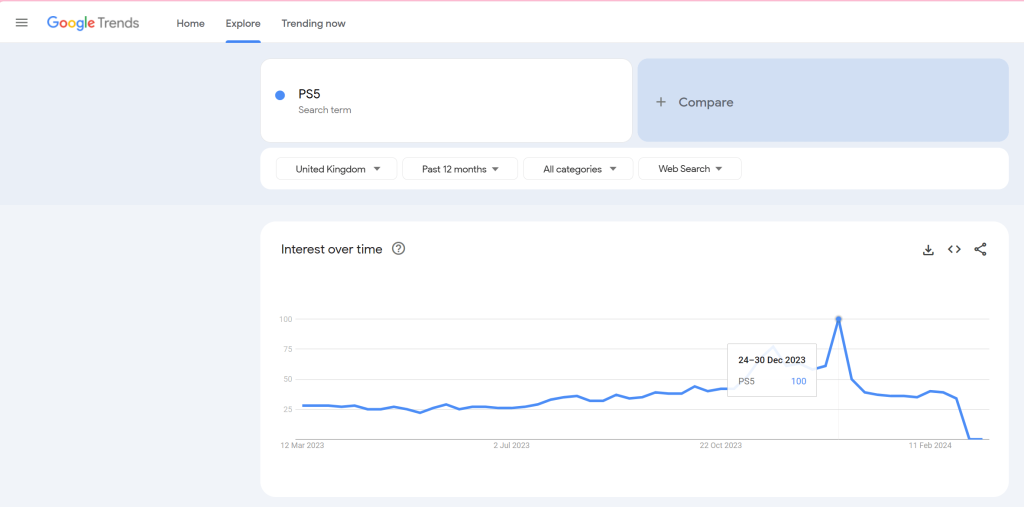
Also, monitor its peaks and valleys to identify if it has any seasonality patterns you can incorporate into an SEO strategy. For instance, “PS5” is more likely to peak during the Christmas period compared to the rest of the year.
Cost-per-click (CPC) can help you quickly gauge keyword competitiveness, as you’ll learn about the average price for a specific keyword for a PPC campaign. The higher the CPC, the more competitive it is.
By analysing KD scores, monitoring search trends, and reviewing CPC for specific keywords, you can gain a detailed understanding of the most competitive keywords for your industry. Combining these tactics could help you make a more informed decision when developing an SEO strategy. For example, a low CPC might contradict a difficult KD score, indicating it might not be as hard to rank in a competitive niche as you first thought.
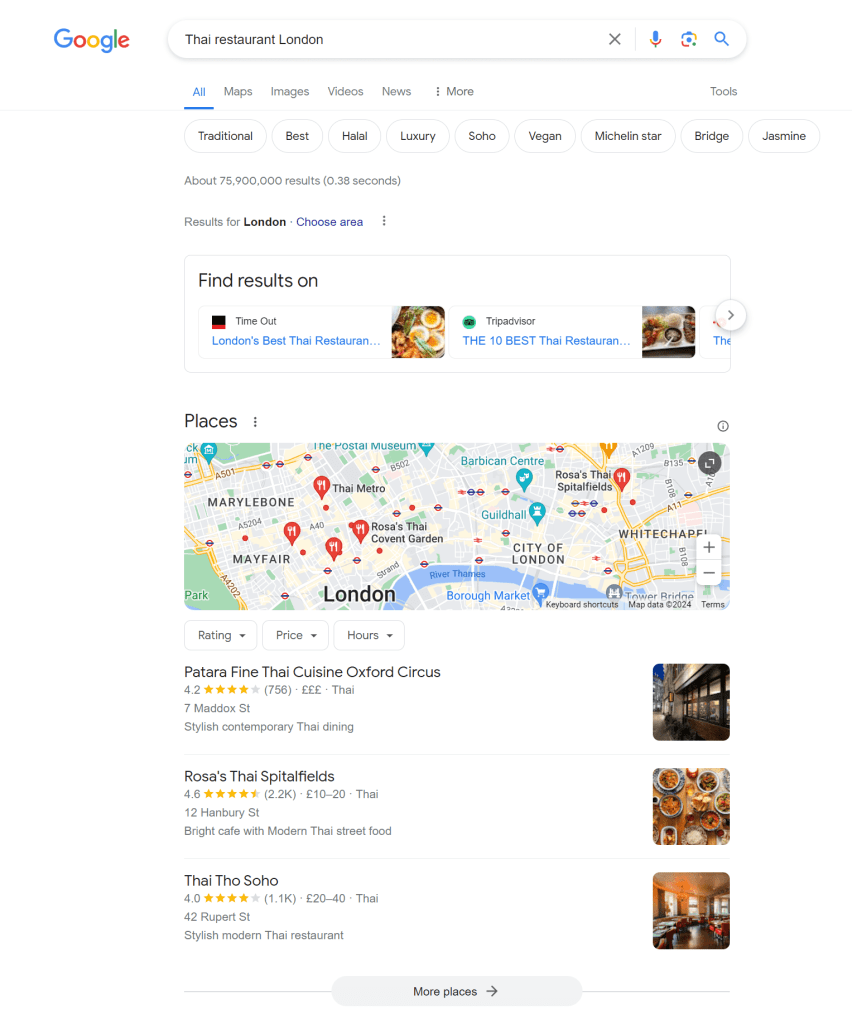
If you’re running a local business, location should be at the forefront of your mind when determining keyword competitiveness.
For instance, a Thai restaurant in Manchester might have less search competition than a Thai restaurant in London. Therefore, you might find ranking for local search terms easier than restaurants in the English capital.

You can expect to lose if you attempt to go up against the biggest brands online for the most powerful keywords. The likes of Amazon, Apple, and Wikipedia are internet giants with refined strategies. For this reason, you’d be wise to target keywords with a lower KD score or long-tail less competitive keywords.
Always choose your keywords wisely. In addition to knowing when you’re beaten, check a keyword’s popularity before incorporating it into your strategy. As mentioned earlier, review its popularity on Google Trends. It might be best to cut it from a campaign if it’s losing popularity, as it may negatively impact your SERP competition ranking.
Climb your way to the top of the SERPs by performing an in-depth competitor analysis to pinpoint your biggest online rivals. Analysing your direct competition’s content can help you determine why they’re so popular in search engines. For instance, they might master technical SEO, publish thought leader-style content, or have a faultless backlink profile.
Find your biggest digital rivals by typing a target keyword into Google to learn who comes out on top. Next, jot down the first five companies in the SERPs for a keyword. Once you have done so, choose another target keyword, repeat the above step, and so on. If the same brands appear on the first pages, they’re likely your biggest industry competitors.
As most industries are saturated with competition, many brands will struggle to compete in the search engines for various keywords and phrases. If your business is in a highly competitive industry, you must choose its keywords wisely to improve its Google ranking and web traffic.
Reach out to the friendly team of experts at Click Intelligence if you’re tired of your rivals ranking above you. We provide many SEO services to improve your site’s online visibility, web traffic, leads, and sales.
For example, we can perform technical SEO audits to identify issues holding your business back in the SERPS, and we could improve your backlink profile to boost your domain authority. Whatever your needs, don’t hesitate to call or email us to take your business to the next level.

AI has become part of how people research and look for products, as well as…

If you’ve ever tested your website using Google PageSpeed Insights, you’ve probably been met with…

The search engine landscape is constantly changing; search in 2022 is no exception. New trends and algorithm updates occur all the time in the search engine world.


The essential eCommerce SEO Handbook, download your free copy today!

Towards the end of September, on the 24th, Google released the second spam update in…

The amount you invest in your link building budget should be based on the realistic…

Search engines aren't the only automated systems accessing, interpreting, and making sense of content found…

There's plenty of scope when creating SEO campaigns. Each industry that turns to experts for…

PR has long supported brands in building authority and spreading awareness, but PR distribution has…

SEO can be complicated. It’s constantly changing and is not a one-and-done job. That’s something…

Google announced it was rolling out a further spam update on August 18, 2026. It…

Growing an SEO agency takes a lot of hard work. You've got to keep up…
Fill out the contact form or give us a call for a free consultation to determine the right digital marketing solutions for the growth of your business.

The team will usually respond within 1 hour.