
How Can Brands Compete in ChatGPT Without Paying for Ads?
AI has become part of how people research and look for products, as well as…


So, you’ve done a huge amount of marketing, you’ve run some successful campaigns, and lots of visitors are flooding to your site. Great news, right? It would be if they weren’t leaving straight away, leading to a high bounce rateBounce rate is the percentage of visitors to a website who visit only one page. A high bounce rate indicates that visitors are not satisfied with your website..
If this sounds like you and you’re wondering how to get your bounce rate down, we’re confident this article will help you learn how to fix your bounce rate.
Google defines your bounce rate as the percentage of people who click onto your content and then leave quite soon afterwards — essentially bouncing off your page.
High and low bounce rates are a little controversial in the SEO world, and especially in the blogging world. There are two types of bounce rates: the original pure percentage bounce rate, and a slightly more involved bounce rate, nicknamed pogo-sticking.
Pogo sticking is when a user visits your site from the search engine results page (SERP) and leaves quickly, returning to the SERP to visit another page. This is a clear indicator to Google that your content was of low value to the user and will result in lost rankings.
Bouncing can be due to a number of reasons, but not getting the information the user wants is the most important one you need to look at. And ideally, you want to get the bounce rate down and keep it as low in the percentages as possible. If you’re wondering, ‘how can I lower my bounce rate, we explore this further below.
Use the tips below to help you reduce your bounce rate and improve your conversion rate.
One of the main reasons people leave websites fairly fast, or they don’t explore further, is because of a poor user design.
Cluttered websites, websites stuffed full of ads (especially noisy ads, or ads that move, flash and cover the screen), sites where the information the user wants is below the fold, and a generally poor user flow will make people leave quickly and not explore further.
For a better user experience, and to learn how to improve the bounce rate of a website,
take a look at the ‘material design’ design principles from Google to see how a beautifully designed, simple, minimalist, and modern website that is clean and clear of clutter makes a huge difference.
While you’re improving your layout and user flow, consider your typography, iconography, and colors.
It’s estimated that 1 in 8 people are ‘neurodiverse’ and may be living with learning differences such as dyslexia and dyspraxia, Attention Deficit Hyperactivity Disorder (ADHD), or ASD (Autism Spectrum Disorder). Up to 50% of people who are neurodiverse will probably not even know it.
It’s important to consider the usability of your website from every angle. Consider the fonts you use (sans serif is best) and the colors (black on white is actually the hardest to read), and even the language you use (check out the Plain English campaign).
When you’re doing a site audit, make sure you lay out your site correctly for accessibility, too. Many people with learning differences such as dyslexia will use screen readers or colored overlay plugins that rely on your website being coded properly to help them use it.
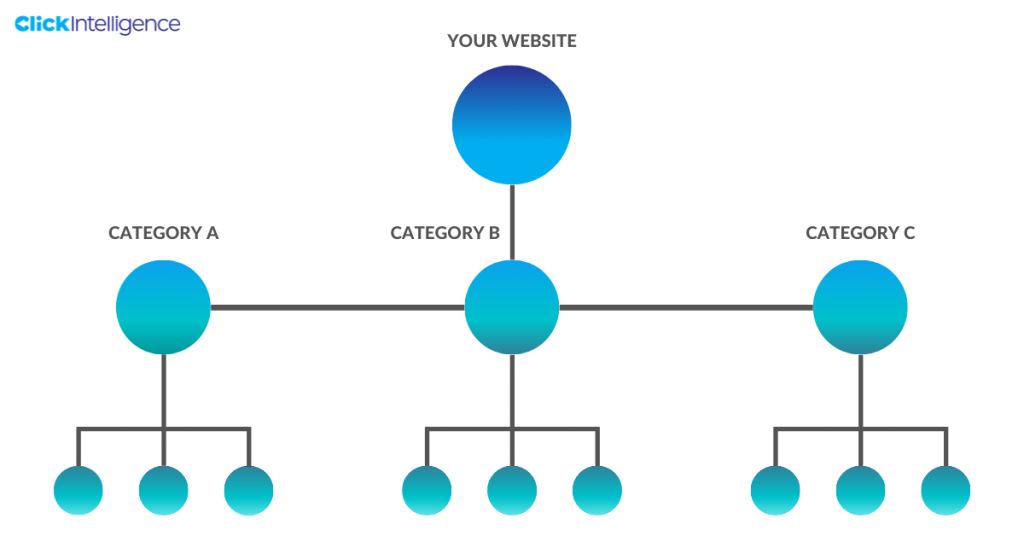
Internal linking, linking to other pages and articles on your website, is great for SEO, but it’s also great for keeping your users on your website and engaged with your content.
It seems like a fairly obvious tip this one but giving your users extra information and sending them down a wormhole on your website is a great way to decrease your bounce rate. However, you do need to ensure that you’re sending them to relevant pages or articles.
For example, if you run a camping blog and you write an article comparing gas stoves, you may drop in a link to your article about how long you should expect camping gas to last. This would be a relevant internal linkInternal links are links that connect different pages on your website. They help users navigate your site and make it easier to find information,, but perhaps the article you did about the best campsites to visit in Wisconsin probably isn’t.
This tip is similar to the layout and design tricks to reduce your bounce rate, but it’s more focused on specific pages. If you are writing long blog posts (generally blog posts should be 750 words and above), people don’t usually want to read huge blocks of text.
Break up the text with images, bolded lines, bullet points, headings, and subheadings. If you’re writing a really long article, say 3000 words or more, then you may wish to put a table of contents at the top to help internal navigation, leading to bounce rate improvement and increased conversions.

AI has become part of how people research and look for products, as well as…

If you’ve ever tested your website using Google PageSpeed Insights, you’ve probably been met with…

Budgeting for SEO is a terrifying prospect. There are so many elements in play, and seemingly endless considerations, rendering it…


Here is how to find the perfect link building partner, download today!

Towards the end of September, on the 24th, Google released the second spam update in…

The amount you invest in your link building budget should be based on the realistic…

Search engines aren't the only automated systems accessing, interpreting, and making sense of content found…

There's plenty of scope when creating SEO campaigns. Each industry that turns to experts for…

PR has long supported brands in building authority and spreading awareness, but PR distribution has…

SEO can be complicated. It’s constantly changing and is not a one-and-done job. That’s something…

Google announced it was rolling out a further spam update on August 18, 2026. It…

Growing an SEO agency takes a lot of hard work. You've got to keep up…
Fill out the contact form or give us a call for a free consultation to determine the right digital marketing solutions for the growth of your business.

The team will usually respond within 1 hour.